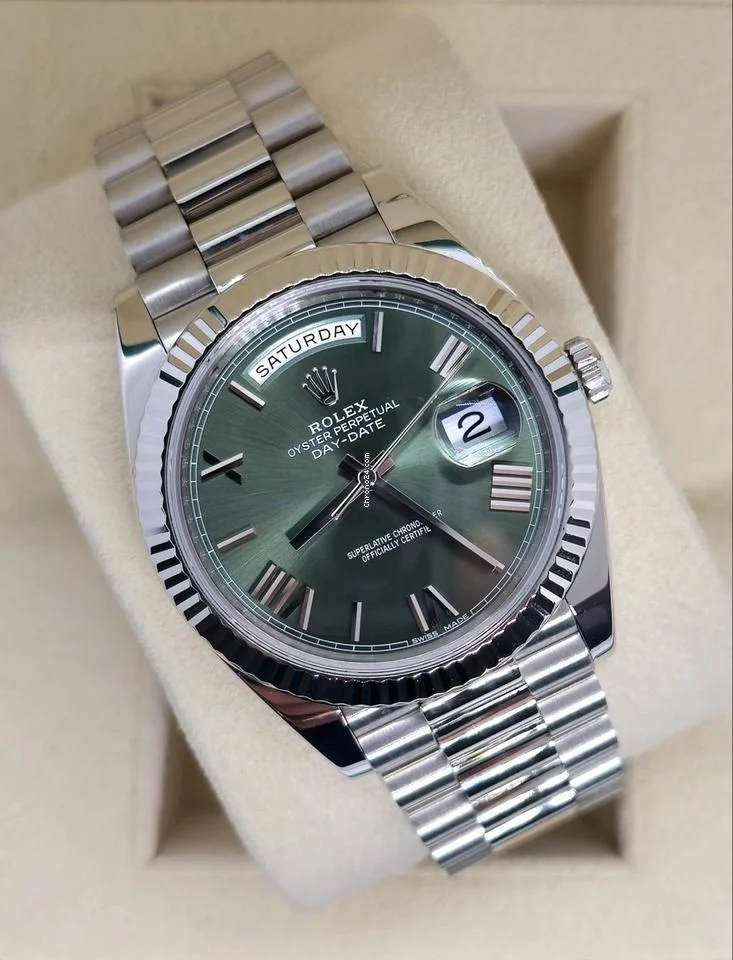
## Topic Map: Understanding Your Rolex and Its Energy Needs
1. **The Short Answer: Automatic vs. Manual-Wind Rolexes**
2. **How a Rolex Automatic Movement Works (The Rotor)**
3. **Power Reserve: How Long Will My Rolex Run Without Winding?**
4. **Why You *Can* Wind an Automatic Rolex (Even If It’s Running)**
5. **When You *Must* Wind Your Rolex Manually**
6. **Common Myths: Can Over-Winding Damage My Rolex?**
7. **Special Cases: Vintage Rolexes and Manual-Wind Models (e.g., Cellini, 6694)**
8. **Winding Best Practices: How to Wind Your Rolex Safely**
9. **The Rolex Watch Winder: Do You Need One?**
10. **Troubleshooting: My Rolex Stops After a Few Hours**
—
### 1. The Short Answer: Automatic vs. Manual-Wind Rolexes
No—if you own a modern automatic Rolex, you do **not** have to wind it every day, provided you wear it daily. Rolex is best known for its automatic (self-winding) movements, which are designed to be powered by the natural motion of your wrist. However, you **should** manually wind it if it has stopped completely. If you own a manual-wind Rolex (like a vintage Cellini or a Rolex 6694), then yes, you must wind it daily to keep it running. The answer depends entirely on the movement type.
### 2. How a Rolex Automatic Movement Works (The Rotor)
Unlike a quartz watch, a mechanical Rolex has no battery. Instead, an automatic movement (Rolex calls its system the **Perpetual Rotor**) uses a semi-circular weight that swings with your wrist motion. This rotor winds the mainspring—the watch’s power source—by rotating 360 degrees. The energy is stored in the mainspring barrel and released gradually through the gear train. As long as you wear the watch for 8–12 hours a day with normal arm movement, the mainspring will stay sufficiently wound. If you leave it still on a nightstand, the reserve will deplete.
### 3. Power Reserve: How Long Will My Rolex Run Without Winding?
A modern Rolex automatic (e.g., Submariner, Datejust, GMT-Master II, Daytona) has a **power reserve of approximately 70 hours** (older models like the 3135 movement have ~48 hours). This means that if you take your watch off on Friday evening and it is fully wound, it will still be running when you put it back on Monday morning. Under normal conditions, daily wear keeps it wound. Only if you leave it unworn for more than 2–3 days will it stop, requiring a manual wind before wearing again.
### 4. Why You *Can* Wind an Automatic Rolex (Even If It’s Running)
Yes, it is perfectly safe to wind a modern automatic Rolex manually. Rolex designs its movements with a **sliding clutch** or **bridging mechanism** that disengages the manual winding when the mainspring is fully wound. You can turn the crown 30–40 times without risk. In fact, if the watch has stopped, you should manually wind it 30–40 turns to get it started, then rely on wrist motion to keep it going. Winding an already-running watch does not harm the mechanism, though it is unnecessary.
### 5. When You *Must* Wind Your Rolex Manually
You must manually wind your automatic Rolex in these scenarios:
– **After it has stopped completely** (e.g., after a weekend off the wrist). Setting the time and then giving it 20–30 winds ensures accurate starting.
– **Before first wear after purchase or after storage.** Even if it’s running, a full wind ensures maximum power reserve.
– **If you wear it infrequently.** For example, rotating between multiple watches—wind it before each wear to avoid the crown being pulled out while the watch is in motion.
**Note:** If you wear your Rolex daily and never take it off for more than 12 hours, you never need to wind it manually.
### 6. Common Myths: Can Over-Winding Damage My Rolex?
**Myth:** “You can over-wind an automatic Rolex and break the mainspring.”
**Fact:** Modern Rolexes (since the 1950s) have a **slipping mainspring** or **bridle system** that prevents over-winding. Once the mainspring is fully wound, the spring slips inside the barrel, making further turns harmless. You cannot damage a modern automatic Rolex by winding it too much. However, **older vintage manual-wind Rolexes** (pre-1950s) can be over-wound, so treat those with caution.
### 7. Special Cases: Vintage Rolexes and Manual-Wind Models (e.g., Cellini, 6694)
– **Manual-wind Rolexes:** Models like the Rolex Cellini (most are hand-wound) and the **Rolex Oyster Precision 6694** require daily manual winding. They have no rotor, so if you don’t wind them, they stop. Always wind them daily, preferably in the morning.
– **Vintage automatics (e.g., 1950s–1970s):** Older automatic movements (like the Caliber 1030) have shorter power reserves (30–36 hours) and may not have modern slip springs. While they are still safe to wind, avoid excessive winding (20–25 turns max) to be gentle on older components.
– **Tip for vintage:** If the watch is dry or has original lubrication, over-winding could stress the mainspring. Have it serviced if you notice resistance.
### 8. Winding Best Practices: How to Wind Your Rolex Safely
Follow these steps to wind any Rolex (automatic or manual) correctly:
1. **Unscrew the crown counter-clockwise** until it pops out into Position 1 (winding position). Do not pull it out fully yet.
2. **Turn the crown clockwise** (toward your palm) in smooth, gentle rotations. For a stopped automatic Rolex, give it **30–40 full turns**. For a manual-wind, wind until you feel slight resistance (about 20–30 turns).
3. **Do not force it.** If you feel hard resistance, stop—especially on vintage pieces. On modern watches, you may feel a faint “click” or slip, which is normal.
4. **Push the crown back in and screw it down** (turn clockwise) to ensure water resistance. Never wind with the crown unscrewed.
**Pro tip:** Wind your watch **before** setting the time and date to avoid damaging the date mechanism while the gears are in motion.
### 9. The Rolex Watch Winder: Do You Need One?
A **watch winder** is a device that rotates your watch to keep it wound when not worn. Do you need one for a Rolex?
– **Yes if:** You own multiple automatic watches and want them ready to wear without hand-winding. This is common for collectors.
– **No if:** You wear your Rolex daily or only leave it off for 1–2 days. The 70-hour power reserve makes a winder unnecessary for a single watch.
– **Caution:** Some experts argue that constant rotation can accelerate wear on the rotor bearings. For a modern Rolex, a quality winder with intermittent rotation is safe; for vintage pieces, avoid extended use.
### 10. Troubleshooting: My Rolex Stops After a Few Hours
If your Rolex stops running after a few hours even after winding it, check these common issues:
– **Not enough initial wind:** You only turned the crown 5–10 times? Wind it 30–40 times to fully charge the mainspring.
– **Low wrist motion:** Sedentary days (working at a desk) may not provide enough motion. Give it a manual boost.
– **Magnetization:** If it stops or runs fast, a magnetic field (common from laptop speakers or MRI machines) can disrupt the hairspring. A demagnetizer can fix it.
– **Needs servicing:** If it continues losing power, the movement may be dry or dirty. Rolex recommends a full service every 5–10 years.
**When to see a watchmaker:** If the crown feels stiff, the watch stops unpredictably, or it loses/gains over 10 seconds per day.
—
### Internal Link Opportunities (for website integration)
– **[Rolex Power Reserve Explained: 70 Hours vs. 48 Hours]** → Link to a detailed movement comparison page.
– **[How to Set the Date on a Rolex Submariner]** → Link to a step-by-step date-setting guide.
– **[Vintage Rolex Maintenance: A Collector’s Guide]** → Link for owners of pre-1970s models.
– **[Rolex Watch Winder: Pros and Cons for Your Collection]** → Link to an in-depth review article.
– **[My Rolex Stops When I Wear It: Common Causes and Fixes]** → Link to a troubleshooting blog post.
**Final Takeaway:** For the majority of Rolex owners, the short answer is **no**—daily manual winding is unnecessary.
Do I Have to Wind My Rolex Every Day? The Complete Guide to Rolex Power Reserves & Winding
## Topic Map: Understanding Your Rolex and Its Energy Needs 1. **The Short Answer: Automatic vs. Manual-Wind Rolexes** 2. **How a Rolex Automatic Movement Works (The Rotor)** 3. **Power Reserve: How Long Will My Rolex Run Without Winding?** 4. **Why You *Can* Wind an Automatic Rolex (Even If It’s Running)** 5. **When You *Must* Wind […]
admin ·