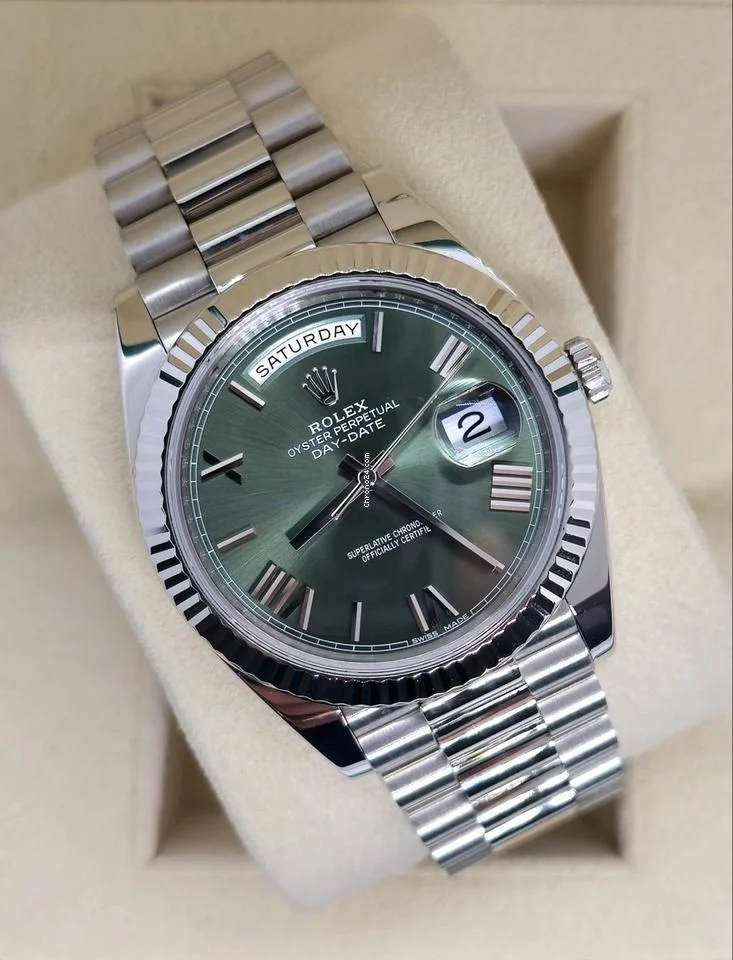
**Topic Map (Table of Contents)**
1. **The Short Answer: No, and Yes**
2. **Understanding the "Sweep": The Mechanics of a Rolex Movement**
– 2.1 The Quartz vs. Mechanical Divide
– 2.2 The Rolex Oysterquartz: The Exception That Proves the Rule
3. **The Vibration of Precision: What a "Tick" Actually Means**
– 3.1 Beats Per Hour (BPH) Explained
– 3.2 The 28,800 BPH Rhythm of Modern Rolex
4. **Inside the Movement: The Rolex 3135 and Caliber 3235**
– 4.1 The Balance Wheel and Escapement
– 4.2 The Rolex Chronergy Escapement (Caliber 3235)
5. **Spotting a Fake: Why Fakes Tick Loudly**
– 5.1 The Dead Giveaway: The Quartz "Stutter"
– 5.2 The Mechanical Fake: A Clumsy Sweep
6. **How to Check Your Rolex: The "Glide Test"**
– 6.1 Visual Inspection
– 6.2 The Sound Check
7. **Rolex Special Cases: The Spring Drive and Cellini**
– 7.1 No Rolex Spring Drive (A Common Misconception)
– 7.2 The Cellini: Manual Wind and a Different Beat
8. **The Sound of Quality: Differences Between Models (Submariner vs. Daytona vs. Datejust)**
9. **Maintenance and History: Why the "No Tick" Matters**
– 9.1 The Cost of Service
– 9.2 The History of the "Sweep Second Hand"
10. **Actionable Advice for Buyers and Owners**
– 10.1 The In-Person Verification
– 10.2 The Audio Recording Test
11. **Frequently Asked Questions (FAQ)**
12. **Internal Links to Related Master Articles**
—
**The Complete Article**
## 1. The Short Answer: No, and Yes
The most direct answer to the question "Are Rolex watches supposed to tick?" is: **No, a genuine Rolex does not produce a loud, discrete ticking sound like a typical quartz watch. Yes, they do "tick" in the sense that they have a constant, high-frequency vibration.** The difference lies in the mechanics. A Rolex features a smooth, sweeping seconds hand that glides across the dial, moving in tiny, rapid increments (usually 8 times per second). This creates a smooth motion and a high-pitched, continuous hum—not a single, sharp "tick-tock."
The classic "tick" you hear from a quartz watch is a single, loud click per second. A Rolex’s movement, by contrast, operates in a fluid, nearly silent ballet of gears and springs. The sound you might hear if you hold it to your ear is a rapid, whirring buzz. If your watch makes a loud, slow, or stuttering tick, it is almost certainly a fake or a quartz-powered watch—with one notable exception: the Rolex Oysterquartz.
## 2. Understanding the "Sweep": The Mechanics of a Rolex Movement
### 2.1 The Quartz vs. Mechanical Divide
To understand the "tick," you must understand the engine. A quartz watch uses a battery to send electricity through a tiny quartz crystal, which vibrates at a precise 32,768 Hz. This electronic pulse drives a stepping motor that moves the seconds hand exactly once per second. Hence, the loud, discrete "tick."
A mechanical Rolex, on the other hand, is a purely mechanical engine. It is powered by a mainspring (wound by the rotor as you move your wrist) and regulated by a balance wheel and escapement. This mechanical heart beats at a much higher frequency—typically 28,800 **beats per hour (BPH)** . This high frequency allows the seconds hand to move 8 tiny steps each second, creating the illusion of a smooth sweep and eliminating the audible second-by-second "tick."
### 2.2 The Rolex Oysterquartz: The Exception That Proves the Rule
This is the single exception that often confuses buyers. From the 1970s to the early 2000s, Rolex produced the **Rolex Oysterquartz** (models 17000, 19018, etc.). These are genuine, battery-powered Rolex watches. They *will* tick. They have a loud, precise quartz tick.
**Crucial Distinction:** An Oysterquartz is a highly collectible, rare watch (production ended around 2003). If you see a modern Rolex (post-2010) that ticks loudly, it is not an Oysterquartz. Modern Rolex is 100% mechanical.
## 3. The Vibration of Precision: What a "Tick" Actually Means
### 3.1 Beats Per Hour (BPH) Explained
BPH is the number of times the balance wheel oscillates in one hour. Higher BPH generally translates to a smoother sweep and greater resistance to shock, but also increased power consumption. Early Rolex movements ran at 18,000 BPH (5 ticks per second). Modern movements are standardized.
### 3.2 The 28,800 BPH Rhythm of Modern Rolex
Since the 1970s, most Rolex calibers—including the famous 3135 and the modern 3235—beat at **28,800 vibrations per hour (vph)** . This is 4 Hz (8 half-oscillations per second). This specific frequency is the "Rolex sound." It creates a smooth, continuous motion that is the gold standard for luxury sports watches. A genuine Rolex will produce a steady, even, high-frequency hum. A fake may have a lower BPH (e.g., 21,600 vph), resulting in a visible stutter, or a cheap quartz movement's loud "tick."
## 4. Inside the Movement: The Rolex 3135 and Caliber 3235
### 4.1 The Balance Wheel and Escapement
The "tick" of a mechanical watch is physically the sound of the escapement locking and unlocking. In a Rolex, the pallet fork (part of the escapement) interacts with the escape wheel. This happens 8 times per second. This interaction produces a crisp, clean *click-clack* at a very high rate. You cannot hear individual beats; you hear a continuous, buzzing whir. The quality of this sound is a hallmark of Rolex’s engineering.
### 4.2 The Rolex Chronergy Escapement (Caliber 3235)
Introduced around 2015, the Chronergy escapement in the Caliber 3235 (found in the Submariner, Datejust 41, Sea-Dweller, etc.) is 30% more efficient. While the beat rate remains 28,800 BPH, the *sound* is slightly different—often described as more refined and muted compared to the older 3135. The "tick" is cleaner, with less metallic resonance. This is a key differentiator for vintage enthusiasts versus modern owners.
## 5. Spotting a Fake: Why Fakes Tick Loudly
### 5.1 The Dead Giveaway: The Quartz "Stutter"
The most common counterfeit Rolex uses a cheap Japanese or Chinese quartz movement. This produces a sharp, one-second "tick" with a noticeable pause between each tick. The seconds hand jumps in one-second intervals. This is the easiest way to identify a fake. A real Rolex never does this.
### 5.2 The Mechanical Fake: A Clumsy Sweep
Higher-end fakes use a cheap mechanical movement (often from the Sea-Gull or Miyota factories) with a lower BPH (6 beats per second vs. Rolex’s 8). This creates a visible "stutter" or "wobble" in the seconds hand. A genuine Rolex sweep is glassy-smooth to the naked eye.
**Actionable Tip:** Ask the seller to stop the watch. A genuine Rolex's seconds hand will stop instantly when the crown is pulled out (hacking seconds). A fake may continue to run or stutter.
## 6. How to Check Your Rolex: The "Glide Test"
### 6.1 Visual Inspection
– **Seconds Hand:** Look closely at the seconds hand. Does it move in tiny, imperceptible jumps? Or does it visibly skip once per second?
– **Distance:** Hold the watch one foot from your ear. A genuine Rolex should be nearly silent. A loud, sharp "tick" is a red flag.
### 6.2 The Sound Check
– **The "Bee Hive" Test:** Place the watch on a hard surface (e.g., a wooden table). A genuine Rolex produces a highly muffled, rapid *tick-tick-tick* that sounds like a continuous buzz. A fake produces a much louder, slower, and more isolated *TICK… TICK… TICK*.
– **Use Your Smartphone:** Record the watch using the voice memo app. Zoom in
The Definitive Guide: Are Rolex Watches Supposed to Tick? Uncovering the Heart of the Crown
**Topic Map (Table of Contents)** 1. **The Short Answer: No, and Yes** 2. **Understanding the "Sweep": The Mechanics of a Rolex Movement** – 2.1 The Quartz vs. Mechanical Divide – 2.2 The Rolex Oysterquartz: The Exception That Proves the Rule 3. **The Vibration of Precision: What a "Tick" Actually Means** – 3.1 Beats Per Hour […]
admin ·