Short answer: You can often tell if a Rolex is real by checking a combination of physical details (weight, movement, dial printing, cyclops magnification, serial/model engravings, bracelet and clasp quality, and the rehaut engraving on modern models) plus provenance and service records — but for absolute certainty, have the watch opened and inspected by a certified watchmaker or an official Rolex service center. Many convincing fakes can pass casual inspection, so use several checks together and seek professional authentication when in doubt.
Detailed explanation
Rolex is one of the most copied luxury watch brands, and counterfeiters range from obvious low-quality copies to extremely sophisticated replicas. A single check rarely guarantees authenticity; instead, compare many details. Genuine Rolex watches are built to high tolerances, use high-quality materials (904L/316L steel historically, now often 904L/Rolex steel), have precise finishing, and are powered by purpose-built mechanical movements. Counterfeits often fail in one or more areas: poor printing on the dial, incorrect or weak magnification on the date, rough finishing, wrong font or spacing on engravings, lightweight case/bracelet, and audible ticking from a quartz movement when the model should be automatic.
Start with obvious visual and tactile checks you can do at home or with a loupe: the second hand sweep, cyclops magnification, crown and logo details, crystal type, caseback style, serial and model numbers, bracelet feel, end links, and clasp engravings. Modern Rolex watches also have a laser-etched coronet at 6 o’clock on the sapphire and the engraved rehaut (inner bezel) that repeats ROLEX with the serial at 6 o’clock. If these features are missing or badly executed it’s a red flag. Still, the most reliable authentication comes from opening the case and inspecting the movement and movement serial numbers — something only a watchmaker or Rolex center should do.
Key reasons / factors
- Movement and second-hand sweep: Genuine Rolex automatic movements produce a smooth sweep (about 8 ticks per second visually). An audible single tick or a jerky sweep usually indicates a quartz or cheap movement.
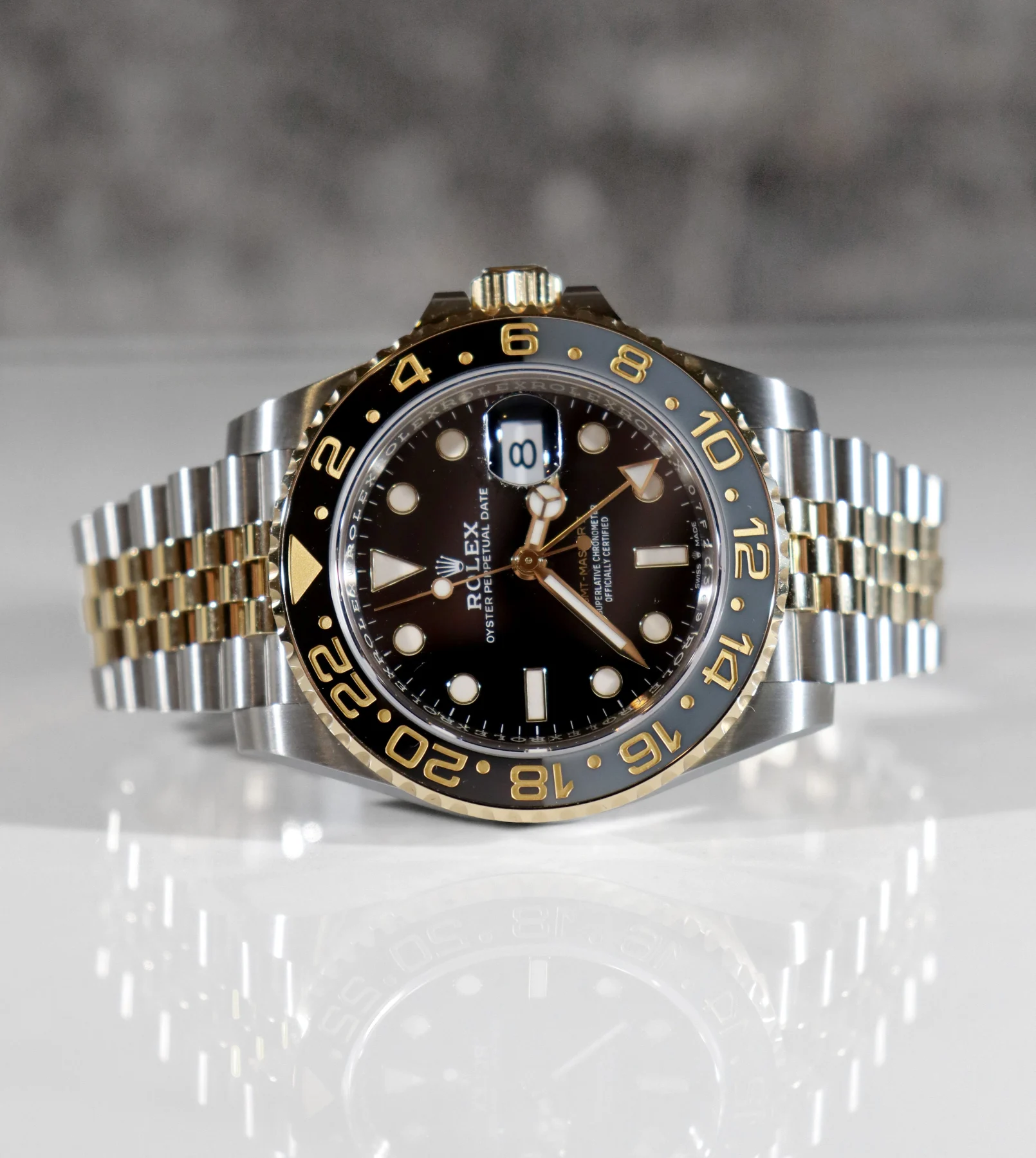
- Cyclops magnification: The date magnifier (cyclops) on authentic Rolex models magnifies the date about 2.5x so numbers nearly fill the window. Poor magnification or off-center date is suspicious.
- Weight and materials: Real Rolex watches have measurable heft and solid bracelets. Lightness or hollow-feeling links suggest a fake.
- Dial printing and lume: Fonts, spacing, and lume application on real Rolex dials are precise and high-quality. Blurred printing, uneven lume, or incorrect font styles are common fake signs.
- Serial/model engravings and rehaut: Serial and model numbers between the lugs (older models) or engraved on the rehaut (modern models) are sharp and precise. Cheap counterfeits often have shallow or poorly executed engravings.
- Caseback: Most Rolex watches have a smooth, unadorned caseback. Exhibition (see-through) casebacks or heavy decorative engravings on mainstream models are usually aftermarket/fake.
- Crown, crystal and laser-etched coronet: Look for a finely detailed crown logo on the winding crown and a tiny laser-etched coronet at 6 o’clock on the crystal for modern models. Many fakes omit or poorly reproduce these.
- Bracelet, end links and clasp: Solid end links, coded clasp stampings, precise engravings, and a robust screw system are hallmarks of real Rolex bracelets.
- Documentation and provenance: Original box, warranty card, receipts, or service records improve confidence. However, documents can be faked, so combine with physical checks.
- Price and seller reputation: If the price is far below market value or the seller is not reputable, assume high risk.
Comparison (real Rolex vs fake Rolex)
| Feature | Real Rolex | Fake/Replica |
|---|---|---|
| Second-hand motion | Smooth sweep (automatic), minimal sound | Jerky or single tick (quartz) or poor sweep |
| Cyclops magnification | About 2.5x, centered | Weak or no magnification, off-center |
| Caseback | Plain, solid (except rare models) | See-through or heavily engraved casebacks |
| Engravings and rehaut | Sharp, precise, deep | Shallow, inconsistent, wrong fonts |
| Bracelet and clasp | Solid links, high-quality finishing, exact stamps | Hollow links, weak clasp, incorrect stamps |
| Price & provenance | Aligned with market, verifiable history | Too cheap, sketchy seller, inconsistent paperwork |
Pros and Cons
- Pros of using visual checks: Quick, inexpensive, and you can filter obvious fakes before spending on professional authentication.
- Cons of relying only on visual checks: High-quality replicas can pass many home checks; only an expert opening the case can inspect the movement for definitive authentication.
- Pros of professional authentication: Certainty: movement inspection, serial verification, and service history checks provide reliable results.
- Cons of professional authentication: Cost and time — authorized service centers may charge and require you to leave the watch for inspection.
FAQs
How much does it cost to have a Rolex authenticated?
Costs vary. A basic authentication by an independent experienced watchmaker can be modest (often under a few hundred dollars), while official verification or a full Rolex service from an authorized center will be significantly more. Some reputable dealers offer authentication as part of a sale or at a reduced fee.
Can a fake Rolex have a smooth second-hand sweep?
Some high-end replicas mimic the sweep by using improved mechanical movements. While many fakes still tick, the presence of a smooth sweep alone is not proof of authenticity — always check other features like the movement inside, case engravings, and finishing.
Is a missing box or papers a sign the Rolex is fake?
Not necessarily. Many authentic vintage Rolex watches lack original boxes or papers due to age or loss over time. Absence of documentation increases the need for thorough physical inspection and preferably verification by an expert.
Are aftermarket modifications a sign of a fake Rolex?
Aftermarket parts (like replaced bezels, custom dials, or non-Rolex crystals) don’t automatically mean the watch is fake, but they can affect value and make authentication harder. Ask for service records and, if possible, have the watch checked by a professional to determine originality.
What is the quickest red flag that a Rolex is fake?
Obvious red flags include a very low price, a ticking (loud) second hand on a model that should be automatic, poor dial printing, wrong or missing cyclops magnification, exhibition casebacks on mainstream models, and light/hollow-feeling bracelets. If you notice one or more of these, stop and investigate further.