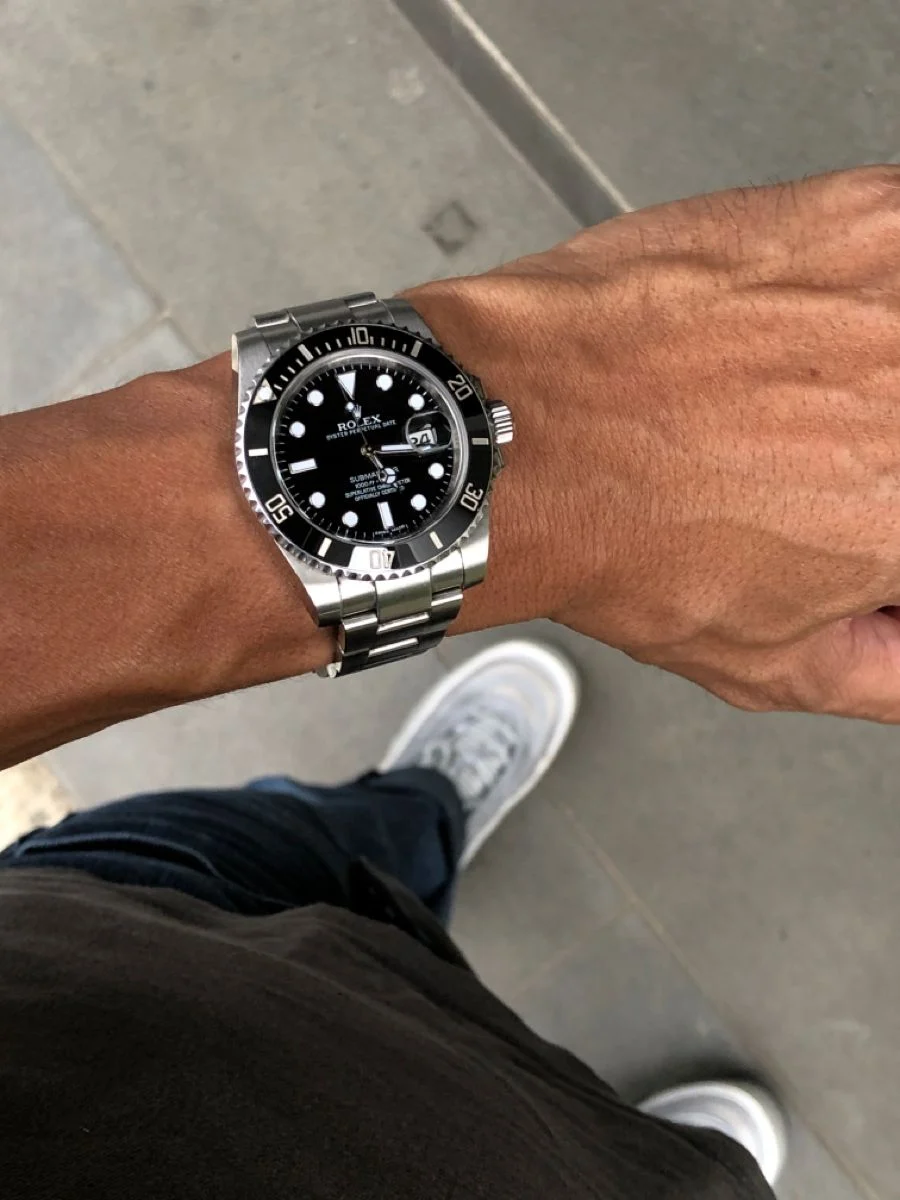
Direct answer: A Rolex Submariner can be worth anywhere from roughly $7,000 for common older pre-owned stainless no-date examples up to tens or hundreds of thousands of dollars for rare vintage references and special editions. For contemporary stainless-steel Submariners, expect typical resale prices between about $9,000–$25,000 depending on reference, condition, and market demand; two-tone and solid-gold models commonly trade higher, and true collector pieces can exceed six figures.
Detailed explanation
The question “how much is a Rolex Submariner worth” has no single numeric answer because the Submariner is a long-running model family with many references, materials, and production eras. Value depends on whether the watch is a current production model bought new from an authorized dealer (retail price), a recent pre-owned model (secondary market), a discontinued variant, or a vintage/collector’s piece. Market conditions, region, and seller type (dealer, private seller, auction) also strongly affect price.
Contemporary Rolex Submariner values:
- New from an authorized dealer: pricing follows Rolex retail lists, but availability is limited in many markets—some buyers pay list price, others face waiting lists. Retail list prices for stainless-steel Submariners are lower than secondary-market resale prices.
- Secondary market (pre-owned or new-old-stock): stainless-steel Submariners with date or no-date typically trade at a premium to retail. Common ranges today for recent stainless models are roughly $9,000–$25,000, with the exact number depending on reference (e.g., 124060 no-date, 126610LN date), condition, and completeness (box & papers).
Two-tone (Rolesor) and solid gold Submariners are considerably more expensive: two-tone models commonly sell for mid-five-figure sums and gold models often sit in the upper five-figures or low six-figures. Limited-production or discontinued models—like the “Kermit,” “Hulk,” or vintage military Submariners—can command significant collector premiums, sometimes reaching well into six figures at auction.
Key reasons / factors
- Reference and model year: Different references (e.g., vintage 5513/5512/6538, transitional 16610, modern 116610/126610/124060) have different values.
- Material: Stainless steel vs two-tone vs solid gold drives large price differences.
- Bezel and dial type: Ceramic bezel versus aluminum bezel, rare dial variations (meters first, gilt, tropical dials) affect value.
- Condition: Case, bracelet stretch, bezel/dial condition, and whether the watch has been polished or altered influences price.
- Completeness: Box, papers, original warranty card, tags, receipts and service history increase desirability.
- Provenance and rarity: Limited editions, celebrity ownership, or unique provenance raise value substantially.
- Market dynamics: Demand, currency, taxes, import duties, dealer premiums, and regional differences affect selling prices.
- Authentication and service: Aftermarket parts or undocumented servicing lower prices; recent factory service can increase buyer confidence but may lower value if replaced original parts were removed.
Comparison
- New (authorized dealer) vs pre-owned: New purchases at retail may be lower cost than secondary market asking prices, but availability is limited and waiting lists persist. Pre-owned markets offer immediate purchase but usually at a premium.
- Stainless steel vs two-tone vs gold: Stainless steel models are the most liquid and commonly traded; two-tone adds luxury and retail cost; gold models are highest-priced but less widely traded.
- No-date vs date models: No-date Submariners (e.g., 124060/14060) often appeal to purists and can be slightly less or comparable in price to date models; the date complication and cyclops date window typically add small retail value but collector demand drives real prices.
- Modern ceramic vs vintage aluminum: Modern ceramic bezel Submariners (post-2008) are more durable and popular, often commanding stronger resale. Vintage aluminum-bezel models can be more valuable if they have rare dials, original parts, or notable provenance.
Pros and Cons
- Pros: High brand recognition, strong resale value, durable design, wide range of references to suit buyers, potential for appreciation on rare models.
- Cons: High upfront cost, risk of counterfeit/altered examples, market volatility (prices can fall), maintenance costs (Rolex service), and grey-market premiums if buying outside an AD.
FAQs
How much does a brand-new Rolex Submariner cost at retail?
Retail prices vary by reference and region; stainless-steel Submariners have a published retail price from Rolex, but availability often means buyers must wait or pay a premium on the secondary market. Expect retail to be materially below many secondary-market listings.
Do Submariners increase in value over time?
Some Submariner references have appreciated strongly—especially rare or discontinued models. However, not every Submariner is a guaranteed investment; factors like rarity, condition, and market cycles determine appreciation. Many owners buy for enjoyment rather than investment.
What makes a Submariner rare and more valuable?
Rarity is driven by limited production, short-run references, unique dial/bezel variations, errors, and historical provenance. Early vintage references, special dials (gilt, tropical), and military or COMEX models are sought after and command premiums.
How much should I expect to pay for a pre-owned Submariner in good condition?
For a recent stainless-steel model in good condition with box and papers, plan on roughly $9,000–$25,000 in the secondary market. Two-tone and gold models typically start higher. Prices fluctuate so check multiple reputable dealers and recent auction results for current market pricing.
How can I verify a Submariner’s authenticity and value?
Authentication steps: buy from reputable dealers, request full service history and original paperwork, compare serial/reference numbers, inspect movement and markings, and consider an independent watchmaker or authorized Rolex service center for verification. Provenance, paperwork, and factory service records improve value and reduce risk.