Short answer: You can tell a real Rolex by checking a combination of physical details (weight, movement, dial printing, Cyclops magnification, crown etching, rehaut engraving, serial/model numbers and bracelet/clasp construction), by verifying paperwork and provenance, and — when in doubt — by having the watch opened and inspected by a qualified watchmaker or an authorized Rolex service center. No single check is definitive; use several checks together or get professional authentication.
Detailed explanation
Rolex counterfeiters range from crude copies to highly sophisticated fakes that can fool a casual observer. The most reliable method is a layered approach: start with visible, non-invasive checks at home or in-person, then move to verification of serial numbers and documentation, and finally confirm the internal movement and finishing with a trained watchmaker or Rolex authorizer. Genuine Rolex watches have strict manufacturing standards: precise dial text, smooth sweeping seconds hand driven by an in-house automatic movement, substantial (but model-dependent) weight, finely executed engravings, and excellent bracelet and clasp engineering. Modern Rolexes also include micro-features like the laser-etched crown on the crystal and engraved rehaut (inner bezel). If one or more of these checkpoints fail, the watch may be counterfeit or a heavily modified piece.
Key reasons / factors
- Movement and sweep: Real Rolex movements are automatic and have a smooth, nearly continuous seconds sweep (roughly 8 ticks per second visually). Loud or irregular ticking often indicates a quartz or poor mechanical movement.
- Weight and materials: Rolex uses high-quality stainless steel (904L/Sea-Dweller and modern steel), gold, platinum — genuine watches feel solid and well-balanced. Lightweight or flimsy components are a red flag.
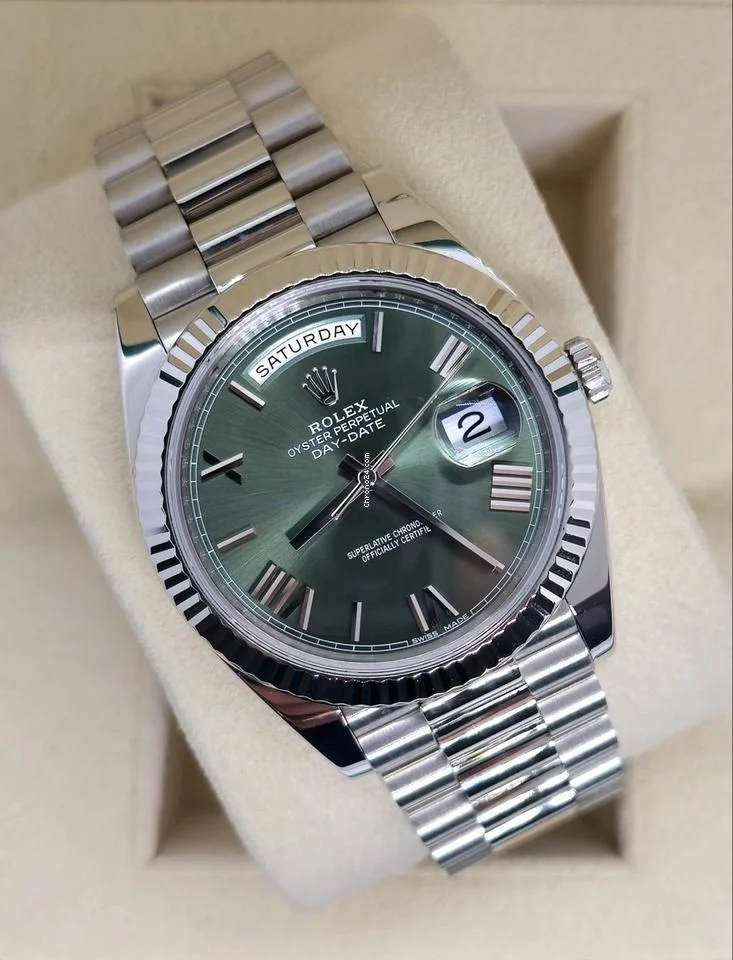
- Cyclops magnification: The date magnifier (Cyclops) on most Rolex models magnifies ~2.5x. Many fakes have weaker magnification or the date appears small.
- Dial printing and lume: Text, logo, and minute markers on an authentic Rolex are crisp and perfectly aligned. Lume application is even and consistent; fake dials often show smudged printing or uneven lume.
- Serial and model numbers: Genuine Rolexes have serial/model numbers deeply and cleanly engraved between the lugs or on the rehaut (modern pieces). Verify these numbers against Rolex records or trusted databases.
- Engravings and rehaut: Modern Rolex models have the Rolex name engraved into the inner bezel (rehaut) and a tiny laser-etched crown on the crystal at 6 o’clock. Poor or absent engravings are suspect.
- Bracelet, endlinks and clasp: Authentic bracelets have tight tolerances, solid endlinks, correct stamped or micro-etched clasp codes, and a smooth clasp action. Fake bracelets often rattle, have hollow links, or incorrect finishing.
- Caseback: Most Rolex models have a smooth, unadorned caseback (exceptions exist). Transparent casebacks or incorrect engravings are common signifiers of a fake.
- Documentation and provenance: Original box, warranty card/papers, service receipts, and a traceable sales history significantly increase confidence in authenticity.
- Price and seller: If the price is far below market value, or the seller is unverified/anonymous, consider it a major warning sign.
Comparison
| Feature | Genuine Rolex | Fake/Replica Rolex |
|---|---|---|
| Movement | In-house automatic, smooth seconds sweep, quality finishing | Often quartz or generic automatic, noticeable ticks or rough sweep |
| Cyclops/date magnification | ~2.5x magnification, centered and clear | Lower magnification, distorted or off-center date |
| Engravings | Sharp, deep engravings (serial/rehaut/crown) with correct fonts | Shallow, inconsistent or missing engravings, wrong fonts |
| Weight & feel | Heavier, solid construction and smooth bracelet action | Often lighter, hollow links, rough finishing |
| Price & provenance | Price consistent with market; verifiable paperwork | Too cheap; seller lacks verifiable history or documentation |
Pros and Cons
- Pros of DIY inspection: Quick, free, and can rule out many obvious fakes by checking weight, Cyclops, dial printing, and engravings.
- Cons of DIY inspection: Advanced replicas can mimic many external features; you risk missing swapped parts or refitted dials.
- Pros of professional authentication: A watchmaker can open the case, inspect the movement and internal markings, pressure-test for water resistance and provide a reliable verdict. Authorized Rolex service can confirm authenticity and service history.
- Cons of professional authentication: Costs (service fees) and the need to trust the service center. If buying a watch from a private seller, sending it away for inspection requires care and potentially escrow arrangements.
FAQs
Can the serial number alone prove a Rolex is real?
Not by itself. A serial or model number helps, but numbers can be forged or swapped between cases. Cross-reference the number with paperwork, production-era styles, and have the movement inspected for a definitive answer.
Is the tiny crown etched at 6 o’clock a sure sign of authenticity?
The laser-etched crown on the crystal is a good sign for modern Rolexes, but some high-end replicas replicate it. Its absence on older models is normal (it was introduced around 2002), so use it as one of several checks.
Can a fake Rolex have a real Rolex movement?
In rare cases, yes — components or entire authentic movements can be transplanted into counterfeit cases to create a convincing fake. That’s why case opening and movement inspection by a professional is the most reliable method.
How much should I pay for professional authentication?
Costs vary by region and service: a basic inspection by a reputable watchmaker can be modest, while a full service and Rolex-authorized verification will be higher. Expect a range from a modest diagnostic fee to several hundred dollars for in-depth services.
Can I tell authenticity from photos alone?
You can spot obvious fakes in photos (poor printing, wrong bezel fonts, weak magnification), but detailed authentication from photos is risky. High-resolution, multiple-angle images help, but physical inspection is best for high-value purchases.