Short answer: You can tell a Rolex is fake by checking a combination of physical details (weight, finishing, dial printing, cyclops magnification, crown and case back, bracelet and clasp), movement behavior (sweep of the second hand), serial and model numbers, and provenance (authorized dealer receipts and paperwork). No single check is definitive—use multiple inspections and, when in doubt, have the watch opened and examined by a qualified watchmaker or an authorized Rolex service center for final authentication.
Detailed explanation
Rolex is one of the most copied watch brands in the world, and counterfeiters range from producing crude replicas to highly convincing fakes that can fool casual buyers. The most reliable approach to tell a Rolex is fake is a layered one: combine visual inspections, tactile checks, mechanical behavior, documentation, and professional verification. Many modern fakes mimic the outward look well, but they usually fail on finer details such as weight and balance, engraving depth and location, dial printing precision, movement quality, and internal finishes that only a trained eye or an opened case can confirm.
Start with simple external checks you can do without tools: feel the weight (real Rolexes use solid metals and feel substantial), inspect the dial close-up for crisp printing, verify the cyclops (date magnifier) for correct 2.5x magnification on most models, and observe the second hand—Rolex movements produce a smooth-sweeping hand, not a distinct tick. Also check the crown logo, case back (most genuine modern Rolexes have a smooth plain case back), and bracelet end links and clasp for quality and consistent engravings. Then move on to serial/model numbers between the lugs or on the rehaut (inner flange) depending on model year, check the holograms/laser-etched crown at 6 o’clock on recent models, and compare against official Rolex references. Finally, when necessary, have the movement inspected: genuine Rolex movements are high-quality in-house calibers with specific markings and finishing.
Key reasons / factors
- Weight and feel: Genuine Rolex watches are made from quality steel (904L stainless or 316L earlier), gold, or platinum and feel hefty and balanced. Lightweight or rattly watches are suspicious.
- Dial printing and indices: Fonts, spacing, and lume application on genuine dials are immaculate. Blurry printing, misaligned markers, or uneven lume points to a fake.
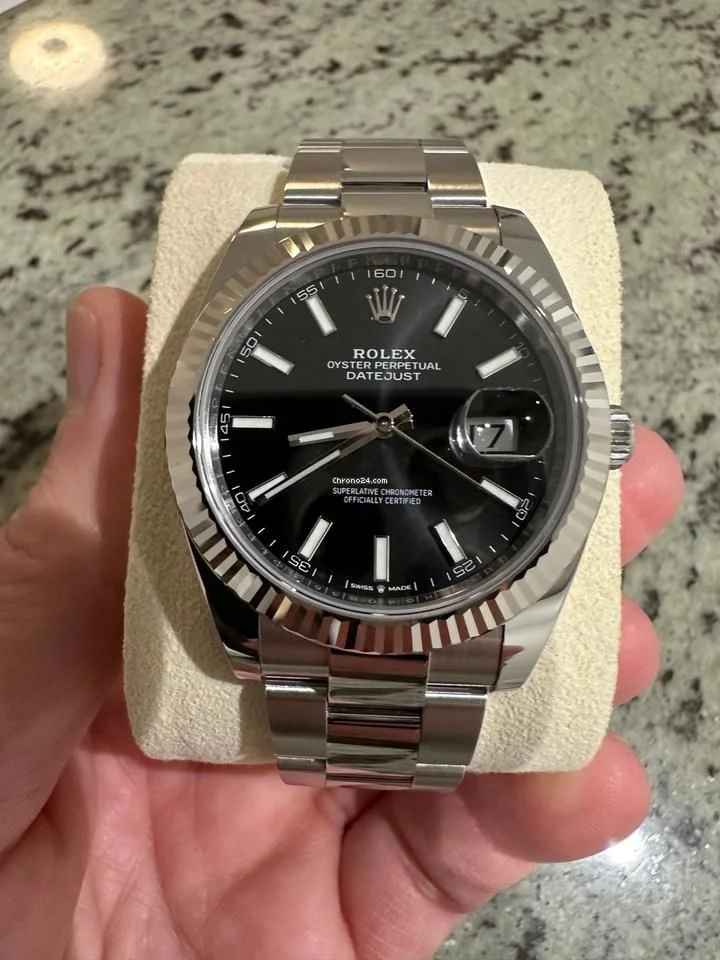
- Cyclops magnification: Most date-equipped Rolex models use a 2.5x magnifier that makes the date fill the window; many fakes use weaker magnification or misaligned cyclops lenses.
- Second hand motion: A real Rolex uses an automatic movement with a smooth sweep (commonly ~8 ticks per second for modern calibers). A coarse one-tick-per-second quartz tick often indicates a fake.
- Serial and model numbers: Deep, precise engravings (between lugs or on rehaut) with correct fonts are typical on genuine Rolexes. Light, acidic or inconsistent engravings are red flags.
- Case back and crown: Rolex usually has a plain screw-down case back (exceptions exist for vintage models); engraved or clear casebacks are rare and often fake. The crown should screw down smoothly and feel precise.
- Bracelet and clasp quality: Links should be tight but smooth, end links fit flush to the case, and clasps have precise logos/markings and micro-adjustments. Flimsy bracelets are suspect.
- Movement and finishing: The ultimate proof is the movement inside. Genuine Rolex movements have specific markings, high-quality finishing, and parts that counterfeit movements usually cannot replicate.
- Provenance and paperwork: Original box, warranty card, service receipts, and purchase history from an authorized dealer increase confidence; missing or inconsistent documentation is a warning sign.
Comparison
| Feature | Genuine Rolex | Typical Fake Rolex |
|---|---|---|
| Weight & feel | Substantial, solid, balanced | Often light, hollow or poorly balanced |
| Dial printing | Crisp text, even lume, perfect logo | Blurry printing, uneven lume, off-centre logo |
| Cyclops magnification | About 2.5x (date fills the window) | Weak magnification or misaligned lens |
| Second hand | Smooth sweep (mechanical) | Quartz tick or jerky sweep |
| Engravings | Sharp, precise, correct font | Shallow, inconsistent, wrong font |
| Case back | Plain screw-down (most models) | Decorative engraving or clear window |
| Movement | In-house Rolex caliber, high finishing | Generic Asian or modified quartz/mechanical movement |
Pros and Cons
- Pros
- Multiple quick checks (weight, dial, cyclops, second hand) can detect many fakes before purchase.
- Knowing what to look for helps avoid scams and protect your investment.
- Proper documentation and buying from authorized dealers greatly reduce the risk of buying a fake.
- Cons
- High-quality counterfeits can mimic many external details, making visual inspection insufficient.
- Accurate authentication sometimes requires opening the case and examining the movement—this should be done by a professional.
- Relying solely on paperwork is risky; forged documents exist and can be paired with a fake watch.
FAQs
How reliable is the serial number for authentication?
Serial and model numbers are important but not infallible. Genuine Rolex engravings have precise depth and font; counterfeiters sometimes copy real numbers onto fake cases. Cross-check serials with paperwork, service records, and a professional inspection. Newer Rolexes often have serial numbers on the rehaut, which can be inspected without removing the bracelet.
Can the second-hand sweep be used to identify a fake Rolex?
Yes and no. A smooth sweep usually indicates a mechanical movement (typical of authentic Rolex), while a one-tick-per-second motion indicates quartz (a common tell for fakes). However, some high-end fakes use mechanical movements with a decent sweep, so the second-hand alone shouldn’t be the only test.
Are aftermarket parts a sign the Rolex is fake?
Not necessarily. A genuine Rolex can have aftermarket or replaced parts from servicing, which lowers collectibility but doesn’t make the entire watch fake. The concern is watches assembled with many non-original parts to mimic rare models. Ask for service history and, if important, request verification from a Rolex service center.
What should I do if I suspect a Rolex is fake after purchase?
Stop using the watch and contact the seller. If purchased from a dealer, request a refund or exchange per their policy. For private sales, you may need legal remedies depending on local consumer protection laws. For definitive proof, have the watch opened and authenticated by a qualified watchmaker or an official Rolex service center; this documentation can support disputes.
Is it worth paying for professional authentication?
Yes—especially for high-value purchases. Professional authentication by a reputable watchmaker or an authorized Rolex service center provides the most reliable assessment and can reveal movement details, serial verification, and signs of modification that are impossible to see externally.