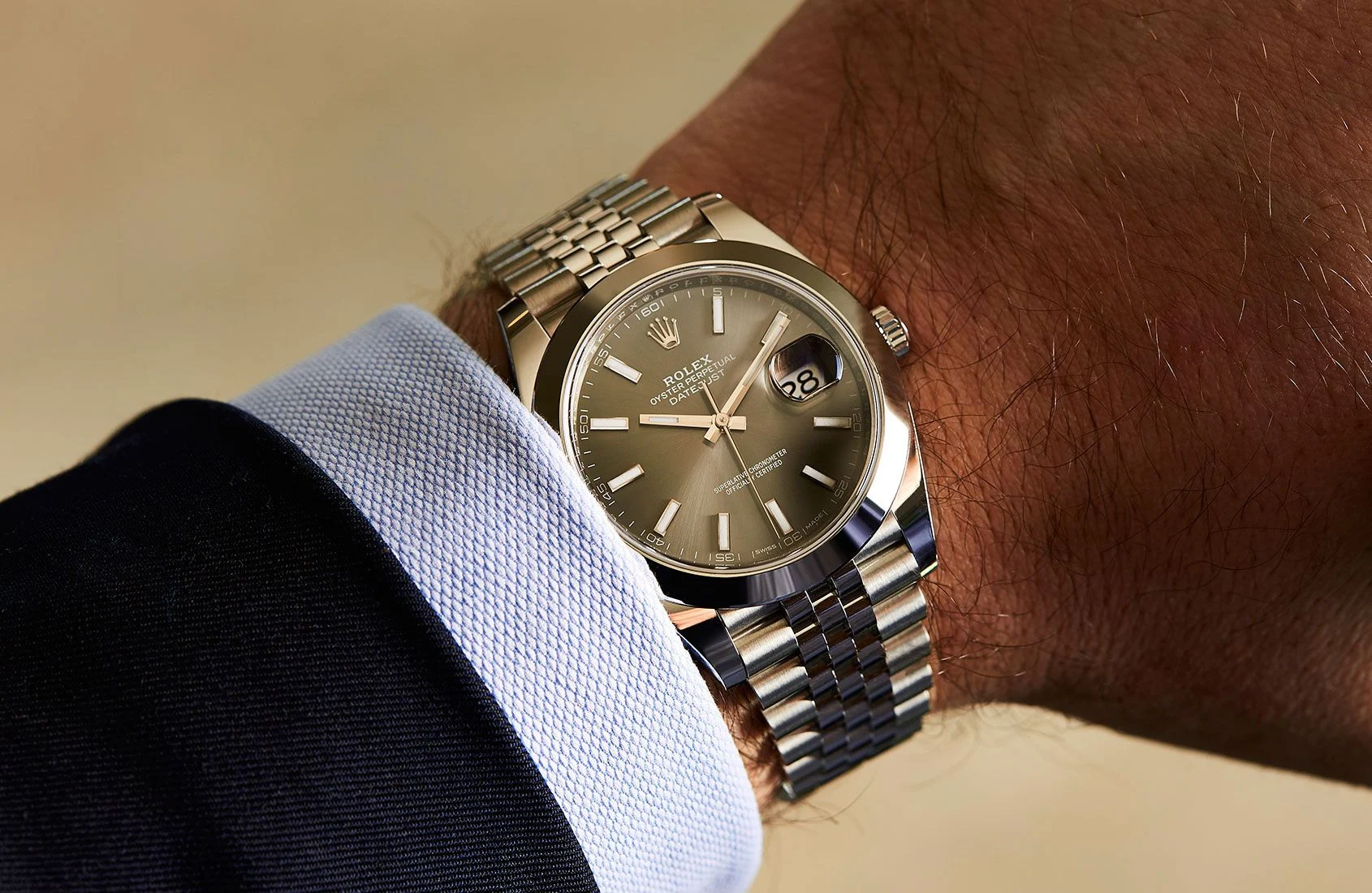
Short answer: Unscrew the screw-down crown, pull it to the winding position (one click), then rotate the crown clockwise about 20–40 full turns to manually wind the movement. Push the crown back in and screw it down securely to restore water resistance. For most modern Rolex watches the Perpetual automatic rotor will keep the watch wound while worn daily, but manual winding is the correct way to start a stopped Rolex or top up the power reserve.
Detailed explanation
Winding a Rolex is straightforward but must be done correctly to protect the crown gasket and movement. Most modern Rolex models use an automatic (self-winding) movement with a Perpetual rotor: wearing the watch winds it as your wrist moves. However, if the watch has stopped or you keep it off the wrist for a day or two, you should wind it manually before setting the time or wearing it.
Step-by-step:
- Prepare the watch. If the watch has been in water or is wet, dry it first. Make sure your hands are clean and dry.
- Unscrew the crown. On Rolex Oyster-style cases, the crown is screwed down to ensure water resistance. Turn the crown counterclockwise (anti-clockwise) until it pops free from the threaded tube. You’ll feel it loosen and spring out slightly to the first position.
- Find the winding position. With the crown unscrewed, you are in the winding position (sometimes called position 1). Do not pull the crown out for time or date setting yet—manual winding is done with the crown in the first position.
- Wind the watch. Rotate the crown clockwise (away from the case) in smooth, full turns. Typical guidance is 20–40 full turns. You’ll feel slight resistance build as the mainspring stores energy. Most modern Rolex movements incorporate a slipping clutch so you cannot “overwind” in the destructive sense, but avoid forcing the crown when it feels firm.
- Set date/time if needed. If you need to set the date or time, pull the crown to the next positions (date quickset if available, then time). Adjust carefully and avoid changing the date when the movement is cycling the date (generally between 8pm and 4am) to prevent calendar mechanism damage.
- Screw the crown back down. Push the crown in and turn it clockwise while pressing lightly until it threads and seals. This restores the watch’s water resistance.
How many turns? Modern Rolex calibers often have a 48–72 hour power reserve. About 20–40 turns will provide sufficient power for most calibers. If the watch is fully stopped, winding until you feel a gentle increase in resistance is a practical endpoint. If you wear the watch daily, the rotor will keep it wound and no daily manual winding is required.
Key reasons / factors
- Crown type: Most Rolex watches use a screw-down Oyster crown to ensure water resistance—always unscrew before winding and screw down after.
- Movement type: Modern Rolex are automatic (Perpetual) and can be manually wound; older vintage Rolex may be manual-wind and require regular winding.
- Power reserve: Knowing your model’s reserve (typically 48–72 hours) helps determine how many turns are needed and when to wind.
- Date and time setting: Use correct crown positions to set date/time and avoid changing the date during the movement’s date-change window.
- Water resistance: Always re-secure the crown to maintain the case’s rated water resistance.
- Care and lubrication: Avoid excessive force—regular servicing keeps the winding mechanism and gaskets healthy.
Comparison
Winding a Rolex vs winding other mechanical watches:
- Rolex (modern automatic): Usually screw-down crown, manual winding in the first unscrewed position; rotor keeps it wound while worn. Slipping clutch on the mainspring prevents damage from overwinding.
- Other automatic watches: Similar process for many brands, but not all have screw-down crowns; some older or microbrand movements may not have a slipping clutch (be gentler and stop when resistance increases).
- Manual-wind watches: Require daily winding by fully turning the crown until resistance is felt—this is routine and expected. Some vintage Rolex models fall into this category and need regular winding, unlike modern Perpetual movements.
Pros and Cons
- Pros:
- Manual winding is quick and gets a stopped Rolex running immediately.
- Gives you control over date/time setting and lets you ensure the watch is fully wound before wearing.
- Minimal risk of damage on modern Rolex due to the slipping clutch and robust construction.
- Cons:
- If you forget to screw the crown down, water resistance is compromised.
- Excessive force when winding or forcing the crown in date-change hours can damage the movement or calendar gears.
- Vintage models without modern protections require more care to avoid overwinding or wear.
FAQs
How many times should I wind a Rolex?
Usually 20–40 full turns from a fully stopped position will provide ample power for modern Rolex calibers (48–72 hour reserves). Wind until you feel a gentle increase in resistance; the movement’s slipping clutch prevents harmful overwinding on most modern Rolexes.
Can winding a Rolex damage it?
On modern Rolex movements it’s unlikely if you wind normally because of built-in protections. However, forcing the crown, winding while the crown is not fully unscrewed, or changing the date during the date-change window can cause damage. Always be gentle and follow the correct crown procedure.
Do I need to wind my Rolex every day?
No. If you wear your Rolex daily the Perpetual rotor will keep it wound. Manual winding is only necessary if the watch has stopped or you haven’t worn it long enough to keep the mainspring charged. For watches stored unworn, winding before wearing is recommended.
What if my Rolex has a stuck screw-down crown?
If the crown is difficult to unscrew or feels seized, do not force it. Have the watch inspected and serviced by an authorized Rolex service center or qualified watchmaker to avoid damaging the threads or gasket.
Is there a difference in winding technique for Submariner, Datejust, GMT, etc.?
The basic procedure is the same across Oyster-cased Rolex models: unscrew crown, wind in the first position, set date/time using additional positions, then screw crown down. Special complications (e.g., sky-dweller) have model-specific setting steps—refer to the owner’s manual for those features.