Short answer: To check if a Rolex is genuine, inspect its weight and build quality, the smoothness of the movement, the date magnification and cyclops, the micro-etched crown on the crystal, serial and model numbers, engravings and fonts, bracelet and clasp construction, and verify paperwork or have the movement opened and inspected by a qualified watchmaker or an authorized Rolex dealer. Use a combination of visual checks, functional tests, and professional authentication for reliable results.
Detailed explanation
Rolex counterfeits range from crude copies to highly convincing replicas. No single check guarantees authenticity by itself; the most reliable approach is a combination of physical inspection, functional testing, and documentary verification. Start with obvious signs — weight, finishing, and the feel of the crown and bezel — then move to precision details such as the engraving quality, the presence of the laser-etched coronet at 6 o’clock on the crystal (introduced ca. 2002), and the date magnification of the cyclops lens (about 2.5x on genuine modern models). Listen for the movement: a real Rolex with an automatic in-house movement (e.g., Perpetual calibers) will have a smooth sweeping second hand (typically ~8 ticks per second) and be quiet compared to cheap quartz fakes.
Check the case back: most modern Rolex models have a smooth, unmarked case back; engraved transparent case backs are usually a red flag unless dealing with special or modified pieces. Serial and model (reference) numbers are precisely engraved (not acid-etched or sandblasted) on the case between the lugs on older models or on the inner rehaut for newer models; these should match the paperwork and be crisp and consistent. The bracelet and clasp should be solid, heavy, and finished to a high standard with correct hallmarks or stamped codes. Lume (glow) on the dial should be bright and consistent, matching known specifications for that model.
Finally, verify provenance: original Rolex boxes, warranty card, and service papers increase confidence but can also be faked. The safest route is to have an independent, qualified watchmaker or an authorized Rolex service center open the case and inspect the movement and components. A professional service will confirm the in-house caliber and serial marks, which is definitive evidence of authenticity.
Key reasons / factors
- Weight and materials: Genuine Rolex watches use high-grade stainless steel (904L/now 904L and 316L), gold, or platinum; fakes often feel lighter and cheaper.
- Movement and sweep: Rolex mechanical movements produce a smooth sweep; quartz or stuttering second hands are warning signs.
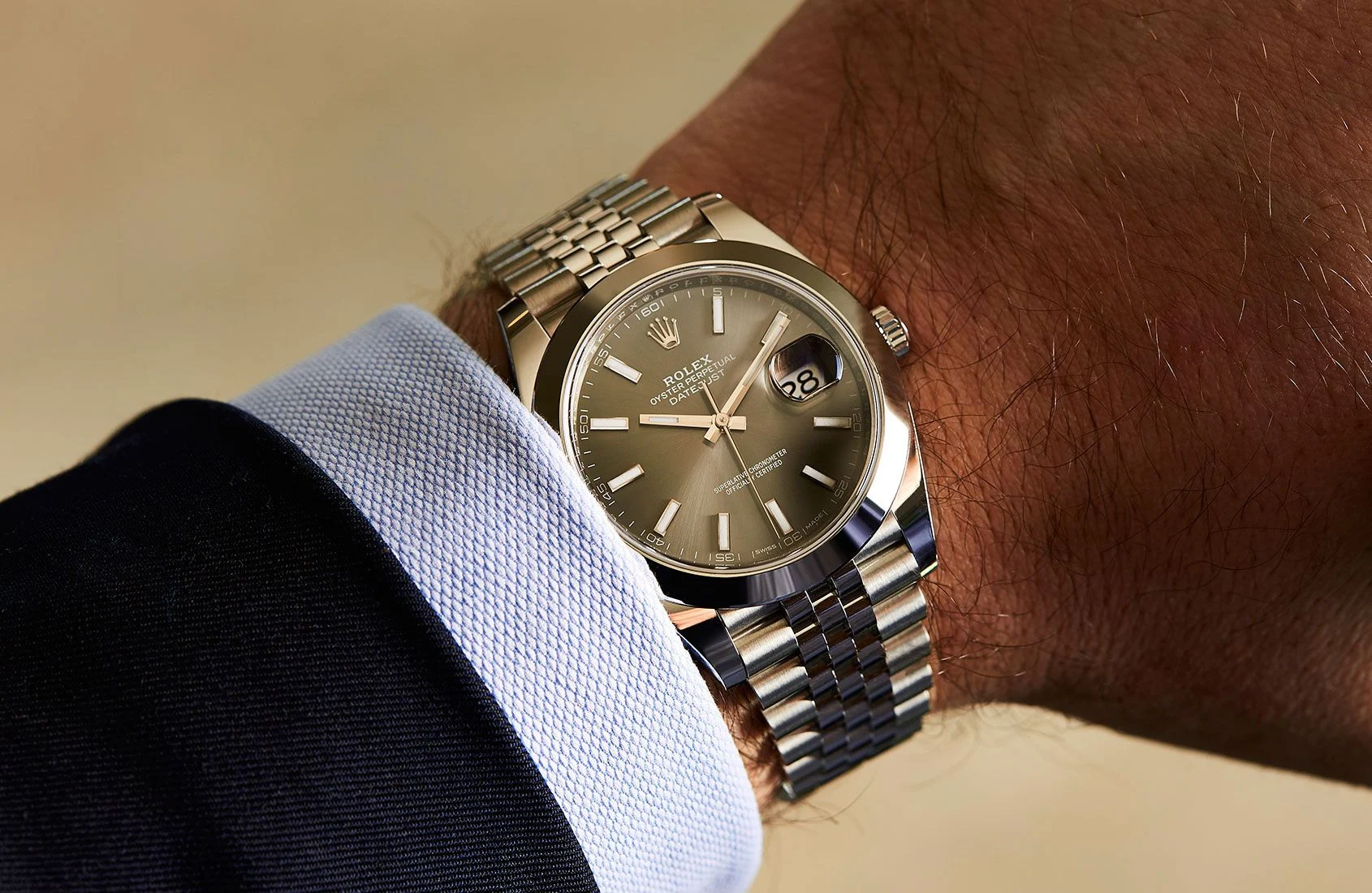
- Date magnification (Cyclops): Authentic Rolex cyclops magnifies ~2.5x; many fakes fail to match this magnification.
- Micro-etched crown: Modern Rolexes have a tiny coronet etched at 6 o’clock on the crystal; visible only under magnification.
- Engravings and serial numbers: Crisp, consistent engravings on the case/rehaut and movement are expected; sloppy or uneven text is suspicious.
- Case back: Most Rolex models have a plain case back; decorative or transparent backs often indicate a fake.
- Bracelet and clasp quality: Solid end links, precise clasp code stamps, and minimal stretch indicate authenticity.
- Documentation and provenance: Original warranty cards, receipts, and service history support authenticity but should be cross-checked.
- Authorized dealer or watchmaker inspection: Professional opening of the case to view the movement is definitive.
Comparison
| Feature | Genuine Rolex | Common Fake |
|---|---|---|
| Weight | Noticeably heavy, solid materials | Lighter, hollow links or cheap alloys |
| Second hand | Smooth sweep, quiet | Ticking or rough movement, noisy |
| Cyclops magnification | ~2.5x, centered and clear | Under-magnified or poorly centered |
| Crystal coronet | Micro-etched crowned logo at 6 o’clock on modern models | Often missing or crudely applied |
| Engravings | Sharp, precise, consistent fonts | Shallow, sloppy, or incorrect fonts |
| Case back | Plain, solid; special models are exceptions | Decorative or transparent backs common |
Pros and Cons
- Pros of thorough checks: Reduces risk of buying a fake, protects investment, ensures proper servicing and resale value.
- Cons of over-reliance on surface checks: High-quality counterfeits can pass many visual tests; only movement inspection by a pro is definitive.
- Pros of professional authentication: Expert inspection of the movement is conclusive and provides documentation.
- Cons of professional authentication: May require cost and time; some sellers may not allow opening the case.
- Pros of buying from authorized dealers: Warranty and clear provenance; peace of mind.
- Cons of buying from secondary market: Potential savings but higher risk; requires due diligence.
FAQs
How much does it cost to authenticate a Rolex?
Costs vary: many independent watchmakers will inspect a watch for a modest fee (or free if you become a customer). An official service center full inspection and service is more expensive, often several hundred to over a thousand dollars depending on model and work required. Simple visual authentication by a reputable jeweler may be free or low-cost.
Can I authenticate a Rolex online from photos?
Photos can reveal obvious red flags (incorrect fonts, poor finishing, wrong bezel or dial for the model), but high-quality replicas can fool photo-based checks. Online expert opinions are helpful for preliminary screening, but physical inspection or movement verification is recommended for certainty.
Where is the serial number on a Rolex?
Older Rolexes have serial and model numbers engraved between the lugs at 6 and 12 o’clock (requires removing the bracelet). Newer Rolex watches often have the serial number engraved on the inner rehaut (the inner ring around the dial). Digital records and warranty cards should match the engraving.
Does the presence of box and papers guarantee authenticity?
No. Boxes and papers can be faked or sold separately. They add confidence when matching serial numbers and purchase history are consistent, but they are not definitive proof. Combine paperwork with physical and professional checks.
What is the best way to avoid buying a fake Rolex?
Buy from authorized Rolex dealers or well-known, trusted secondary market sellers with return policies and documented provenance. Request high-resolution images, serial/reference verification, and allow a watchmaker or Rolex service center to inspect the movement before finalizing high-value purchases.