Direct answer: The Rolex serial number can be found on the watch case (historically engraved between the lugs at the 6 o’clock position), on modern Rolex watches engraved into the inner bezel or rehaut at 6 o’clock, and also on the original paperwork/warranty card and the watch box. If you cannot read the engraving yourself, an authorized Rolex dealer or skilled watchmaker can locate and verify the serial number for you.
Detailed explanation
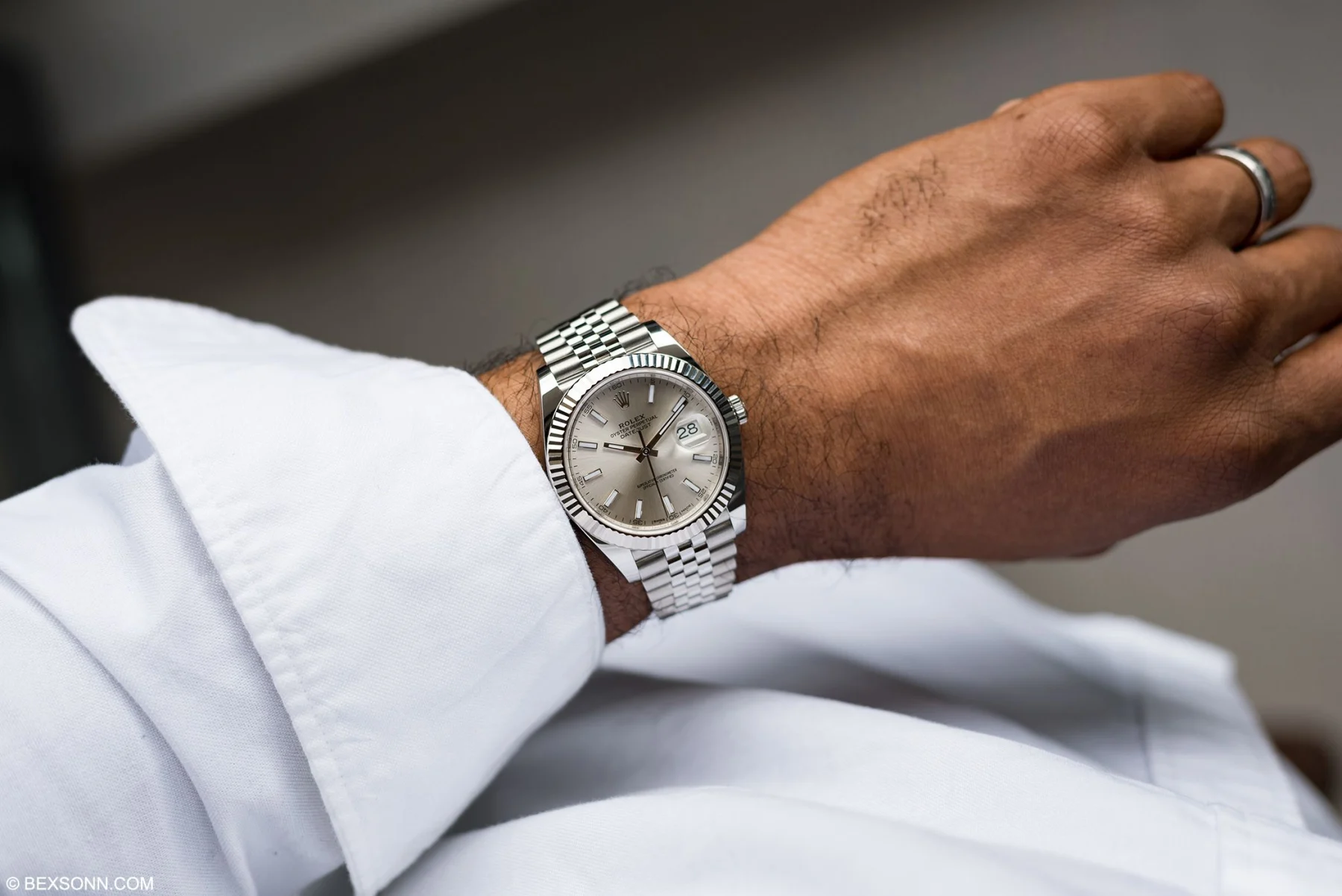
Knowing where to find a Rolex serial number is essential for dating, authenticating, and registering a watch. For vintage and older Rolex models, the serial number was engraved on the case between the lugs at the 6 o’clock side (you must remove the bracelet to see it). Beginning in the early-to-mid 2000s Rolex started moving the serial engraving to the rehaut — the inner bezel visible around the dial — with later models showing the serial at the 6 o’clock position on the rehaut. Modern Rolex watches will also include the serial number on the warranty card and in the original box documentation.
Other identifiers exist too: the model/reference number is usually engraved between the lugs at the 12 o’clock position, and many modern Rolex crystals feature a tiny etched crown at 6 o’clock (a security feature) — but that crown is not a serial number. Rolex rarely, if ever, engraves serial numbers on the caseback of production models, so you should not expect to find the serial on the back plate.
| Era / Type | Where to find the Rolex serial number | Notes |
|---|---|---|
| Vintage / Pre-2000s | Between the lugs at 6 o’clock | Requires removing the bracelet; engraving depth and style vary by period. |
| Early-to-mid 2000s transition | Some models show both lug engraving and rehaut engravings | Rolex gradually added the rehaut engraving as an anti-counterfeiting and identification step. |
| Modern Rolex (mid-2000s onward) | On the rehaut (inner bezel) at 6 o’clock; also on warranty card | Easier to read without removing the bracelet; visible with light and a loupe. |
| Other locations | Warranty card, original box and service papers | Always keep paperwork—this is the most straightforward place to find the serial. |
Key reasons / factors
- Model year and production era: The location of the serial number changed over time — older watches use lug engraving; modern watches use the rehaut.
- Ease of access: Rehaut engraving is visible without removing the bracelet; lug engraving usually requires removing the bracelet.
- Authentication needs: Serial numbers should match the paperwork and any service records; discrepancies can indicate tampering or counterfeit pieces.
- Wear and maintenance: On vintage watches the lug engraving can be worn down by polishing or age, making it harder to read.
- Security features: Rolex introduced additional security marks (micro-etched crown on the crystal and rehaut engraving) to deter counterfeits.
Comparison
Comparing the different locations and methods for finding a Rolex serial number helps you choose the best approach for identification and verification:
- Between the lugs (older watches) — Pros: original factory engraving, useful for vintage dating. Cons: requires removing bracelet, may be worn or polished away.
- Rehaut / inner bezel (modern watches) — Pros: easily visible, less likely to be removed, aligns with warranty card. Cons: counterfeiters sometimes copy rehaut engravings, so verification with paperwork and dealer checks is still recommended.
- Paperwork and warranty card — Pros: fastest and safest place to find serial number, provides provenance. Cons: documentation can be lost or faked; always verify authenticity through a professional if uncertain.
Pros and Cons
- Pros of locating the serial number yourself:
- You can date and partially authenticate your watch quickly.
- Helps when buying/selling or insuring the watch.
- Cons of locating the serial number yourself:
- Removing the bracelet to check lug engravings can cause damage if done incorrectly.
- Polished or worn engravings can be hard to read and lead to misinterpretation.
- Counterfeiters sometimes duplicate serials or rehaut engravings; visual location alone does not guarantee authenticity.
- Pros of using an authorized dealer or watchmaker:
- Professional tools and experience prevent damage and can read faint engravings.
- Dealers can cross-check records and verify authenticity.
- Cons of using a dealer or watchmaker:
- May involve fees or require leaving your watch for inspection.
FAQs
1. Can I find the Rolex serial number without removing the bracelet?
Yes for most modern Rolex watches: the serial number is often engraved on the rehaut (inner bezel) at the 6 o’clock position and can be seen without removing the bracelet. For older models with lug engraving, you will need to remove the bracelet to read it.
2. What should I do if the serial number is worn or unreadable?
If the lug engraving is worn or polished away, a professional watchmaker or authorized Rolex service center can sometimes read faint markings with magnification or confirm identity via movement numbers and service records. Always avoid aggressive cleaning or polishing that could further erase markings.
3. Can the Rolex serial number tell me the production year?
Yes, serial numbers and reference ranges often allow approximate dating, especially for older Rolex models. However, Rolex has adjusted numbering systems over time and later re-use or changed practices make exact dating less straightforward. For a precise date, cross-reference the serial with trusted databases or have a dealer confirm.
4. Is the serial number ever on the caseback?
Generally no — Rolex typically does not engrave serial numbers on the exterior caseback of production watches. If you find a serial number there, it may be an aftermarket engraving or part of a service, so verify with a professional.
5. How can I verify that the serial number is genuine?
Compare the engraving location and style with what is expected for the model and era, check the paperwork/warranty card and service records, and if in doubt have an authorized Rolex dealer or reputable watchmaker inspect the watch. They can confirm movement numbers and other internal identifiers to ensure authenticity.