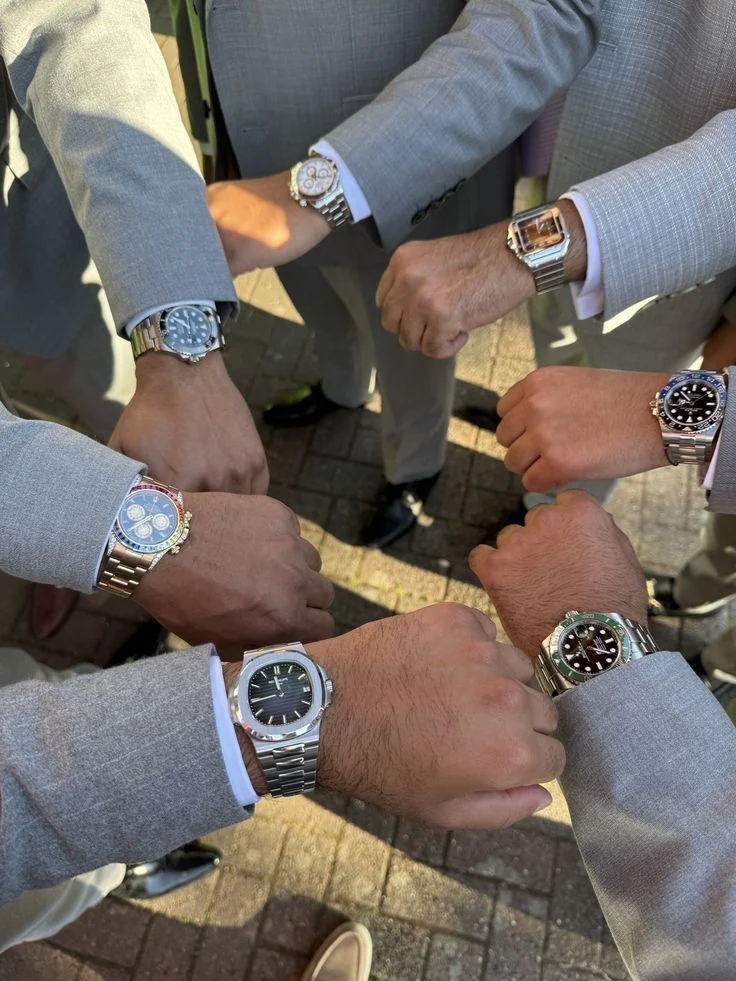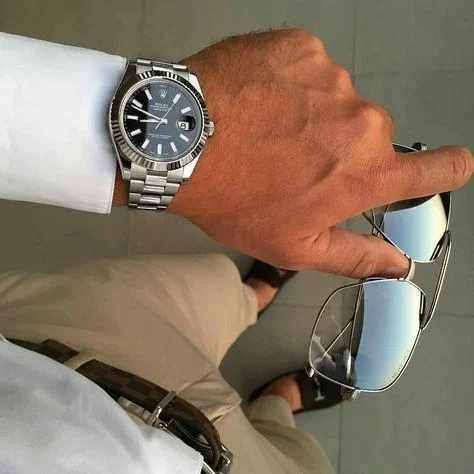
Direct answer: Rolex does not publish official annual production figures, but industry experts and multiple credible estimates place Rolex’s annual production at approximately 700,000 to 1,200,000 watches per year (commonly cited as around one million watches annually). This is an informed estimate based on supply-chain analysis, gray market inventory, company capacity, and disclosures from related industry sources.
Detailed explanation
Because Rolex is privately held and famously secretive about its operations, there is no single public “Rolex production per year” number from the company. Instead, analysts, journalists, auction houses, and insiders derive estimates from several clues: the number of movements and components produced by suppliers, the output of Rolex’s factories in Geneva and Bienne, exports recorded by Swiss customs, and the quantity of watches appearing in authorized dealer channels and the secondary market.
Most widely referenced industry estimates converge on roughly 800,000 to 1,000,000 watches per year for many recent years. Some estimates broaden the range to 700,000–1,200,000 to account for year-to-year variation driven by model refreshes, economic cycles, and constrained supply chain periods (for example during global disruptions). A figure near one million per year makes sense for a vertically integrated manufacturer such as Rolex: the company produces its own movements, cases, bracelets, dials, and crystals at scale, enabling high output while maintaining quality control.
It’s important to understand that “production” here generally means fully finished watches leaving Rolex factories. It does not necessarily mean every watch is sold immediately—some watches are held in dealer inventories, returned for service and refinishing, or appear later via the gray market and auctions. Also, the composition of that production (steel sports models vs. precious metal dress watches) changes and influences perceived availability.
Key reasons / factors
- Rolex secrecy and private ownership: Rolex does not disclose detailed production, sales, or inventory figures, so estimates rely on indirect data.
- Vertical integration: Rolex manufactures most components in-house, giving it the capacity to produce at industrial scale while controlling quality—this supports higher annual output.
- Model mix and complexity: The mix of steel sports models (high demand) versus precious metal and gem-set models (lower volume) affects annual numbers and waiting lists.
- Global demand and waiting lists: High demand for certain references (e.g., Submariner, Daytona, GMT-Master II) creates perceived scarcity even when Rolex’s total annual production is high.
- Supply chain constraints: Component shortages, factory maintenance, and global events can cause production to fluctuate year to year.
- After-sales and refurbishment: Rolex services and refurbishes many watches; while these are not “new” production, they impact available inventory and market flow.
Comparison (if relevant)
| Brand | Estimated annual production | Notes |
|---|---|---|
| Rolex | ~700,000–1,200,000 (commonly ~1,000,000) | Privately estimated; high vertical integration and global distribution |
| Omega | ~400,000–700,000 | Part of Swatch Group; large but somewhat lower volume than Rolex |
| Patek Philippe | ~40,000–70,000 | Much lower volume; highly exclusive, hand-finished production |
| Seiko (Grand Seiko separate) | Millions (mass-market Seiko); Grand Seiko ~60,000–100,000 | Seiko spans mass-market and high-end; Grand Seiko volume is limited |
Pros and Cons
- Pros
- High production enables robust global availability across authorized dealers.
- Economies of scale support consistent quality control and investment in R&D and manufacturing technology.
- Wide model range—from professional sport watches to precious-metal dress watches—meets varied buyer needs.
- Cons
- High total output combined with selective allocation creates perceived scarcity and long waiting lists for popular models.
- Secondary market premiums and gray market distortions can make buying at retail difficult for certain references.
- Limited transparency about production numbers fuels speculation and misinformation online.
FAQs
Does Rolex ever publish how many watches it makes each year?
No. Rolex is a privately held company and traditionally does not publish detailed production or sales figures. Public estimates are assembled by industry analysts using customs data, supplier information, and observed market flows.
Why do Rolex watches feel scarce if Rolex makes around a million per year?
Scarcity is often concentrated by model. Steel sport models (e.g., Submariner, GMT-Master II, Daytona) have demand far outstripping allocation. Rolex controls distribution tightly through authorized dealers, leading to waiting lists and secondary-market premiums even though total annual production is high.
How many Submariners or Daytonas are produced each year?
Rolex does not break down production by model. Industry estimates suggest popular sports models represent a significant portion of annual output, but precise per-model numbers are speculative. The exact split varies year to year based on demand and strategic allocation.
Has Rolex production changed recently?
Production can fluctuate with economic conditions, factory upgrades, and global events (e.g., supply-chain disruptions). While long-term capacity supports roughly a million watches annually, short-term variation is normal.
Are Rolex watches mass-produced?
Rolex produces watches at industrial scale, but “mass-produced” in the sense of low quality is inaccurate. Rolex applies rigorous quality control, in-house manufacturing, and finishing standards—resulting in high-volume production with strong quality assurance.