Short answer: Rolex began introducing synthetic sapphire crystals in the late 1970s and completed the transition across most of its model range through the 1980s. Professional tool watches (Submariner, Sea‑Dweller, GMT) were among the earliest to adopt sapphire around 1978–1982, while dress models such as the Datejust and Day‑Date switched over more gradually and were generally fitted with sapphire by the mid‑to‑late 1980s.
Detailed explanation
For decades Rolex used acrylic (plexiglass) crystals on its Oyster watches because acrylic was easy to form, relatively shatter‑resistant, and traditional. Starting in the late 1970s the industry-wide move to synthetic sapphire — prized for its superior scratch resistance and optical clarity — reached Rolex. The company began fitting sapphire crystals on select models first, particularly where scratch resistance and pressure resistance mattered most: dive and professional watches.
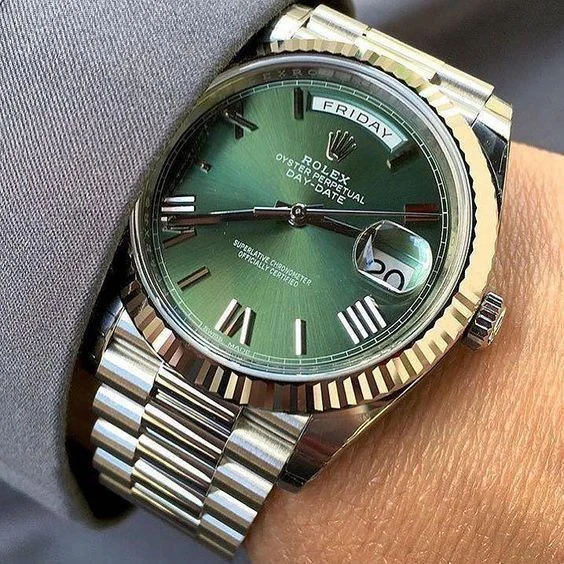
Notable early examples of Rolex models fitted with sapphire crystals include certain late 1970s and early 1980s professional references (for example, later Submariner and Sea‑Dweller variants) and the Oysterquartz line introduced in 1977, which featured flat sapphire. Over the next several years Rolex rolled sapphire out more widely. By the mid‑1980s most new Rolex watches left the factory with sapphire crystals rather than acrylic; remaining acrylic examples became characteristic of older, vintage pieces.
This change was not a single day or model — it was a phased adoption driven by manufacturing advances, customer expectations, and the practical advantages of sapphire. Rolex also refined how the Cyclops magnifier (the little date bubble) was attached to sapphire crystals and how the crystals were sealed to maintain water resistance.
Key reasons / factors
- Scratch resistance: Synthetic sapphire is far harder than acrylic and resists everyday scratches from keys, grit and metal.
- Optical clarity: Sapphire maintains clarity over time; it doesn’t yellow the way older acrylic can.
- Industrial capability: Improvements in crystal manufacturing during the 1970s made sapphire more affordable and practical for watchmakers.
- Professional requirements: Dive and tool watches required robust, pressure‑resistant crystals — sapphire offered better long‑term performance.
- Market expectations: As consumers came to expect high durability from luxury sports watches, sapphire became a selling point.
Comparison
Comparing acrylic, mineral glass and sapphire helps show why Rolex moved away from acrylic:
- Acrylic (plexiglass): Easily polished to remove scratches, relatively shatter‑resistant and historically authentic for vintage Rolex models. However, it scratches easily and can eventually yellow.
- Mineral glass: Harder than acrylic and cheaper than sapphire. It resists scratches better than acrylic but worse than sapphire; it is more commonly used in lower‑cost watches.
- Synthetic sapphire: Excellent scratch resistance and long‑term clarity. More brittle than acrylic (can chip or crack on severe impact) and historically more expensive to produce, but overall the best choice for long‑lasting luxury watches.
Pros and Cons
- Pros:
- Outstanding scratch resistance — keeps a new look for years.
- Superior clarity and less likelihood of discoloration over time.
- Matches the premium positioning of Rolex sports and dress watches.
- Better long‑term durability against everyday wear (excluding severe impacts).
- Cons:
- More brittle than acrylic — can chip or shatter under a hard impact.
- Historically added cost and complexity in manufacturing, especially when integrating the Cyclops magnifier.
- Polishing scratches out is not possible like with acrylic; replacement is required for deep damage.
FAQs
Were all Rolex models switched to sapphire at the same time?
No. Rolex phased in sapphire crystals across different lines. Professional models and the Oysterquartz were among the first to get sapphire in the late 1970s and early 1980s. Dress models and some Datejust/Day‑Date variants transitioned more slowly, with broad adoption by the mid‑to‑late 1980s.
How can I tell if a vintage Rolex has an acrylic or sapphire crystal?
Acrylic crystals feel slightly softer to the touch and can be polished to remove scratches; they often have a warmer look and can show micro‑scratches. Sapphire is noticeably harder, resists scratching, and feels glasslike. A watchmaker can confirm by inspection, and original paperwork or reference/model year can also provide guidance.
Does Rolex still use sapphire crystals today?
Yes. Modern Rolex watches are fitted with synthetic sapphire crystals as standard. Rolex has continued to refine its crystal engineering and how features like the Cyclops magnifier are integrated with sapphire.
Can sapphire crystals be repaired if scratched or chipped?
Minor scratches are rare on sapphire; if they occur they are difficult to polish out. Chips or cracks usually require crystal replacement rather than repair. Authorized service centers and experienced watchmakers can replace a Rolex sapphire crystal while maintaining water resistance.
Are sapphire crystals a factor in Rolex collector value?
Yes. Collectors often value original parts and period‑correct crystals. Acrylic crystals are part of the authentic vintage look for older pieces, while sapphire signifies a later production period. Whether that raises or lowers value depends on buyer preference and model rarity.